Teachers' Camps
The Teachers’ Camps facilitated a process of reflection and joint creation within the teaching community of the metropolitan region. The camps were inspired by the Catalan pedagogical renewal movements that are the focus of the Fora per fer escola project, which forms part of the pre-biennial research work of Manifesta 15 Barcelona Metropolitana.
The programme consisted of a series of gatherings – organised in a discussion and workshop format – that aimed to promote dialogue and mutual learning within the teaching community. Through these exchanges, which took place in the spring of 2024, archives on various pedagogical initiatives of the 20th century were retrieved in order to recontextualise them and reflect collectively on current pedagogical practices.
The gatherings focused on three thematic strands: Education is Politics; Pedagogical Innovation, Renewal and Transformation; and Communities, Care and Environments in relation to schools. For each of these modules, a discussion session was organised with various artistic and research teams, followed by a workshop. The artist and educator Alba Oller was tasked with supporting the activity of this work space with the goal of creating a pedagogical resource applicable to the entire Catalan educational context that might enable the challenges currently faced by the educational community to be addressed.
This module centred on two key pedagogical initiatives related to the self-organisation and resilience of educational communities: the Batec (Heartbeat) teachers’ collective and the Escoles en lluita (Schools in Struggle) social and neighbourhood movement. The discussion took place at the Torre Balcells School of Live Arts in El Prat de Llobregat, with a panel composed of Marta Venceslao, Alba Oller and Anna Díaz. Together with the audience, the panellists discussed how teachers might turn schools into catalysts for social transformation. In this regard, they brought up problem issues such as the tendency to put schools at the service of the needs of neoliberalism, the stress generated by the bureaucratisation of education, and the use of pedagogical tools and the importance of providing them with meaning and content.
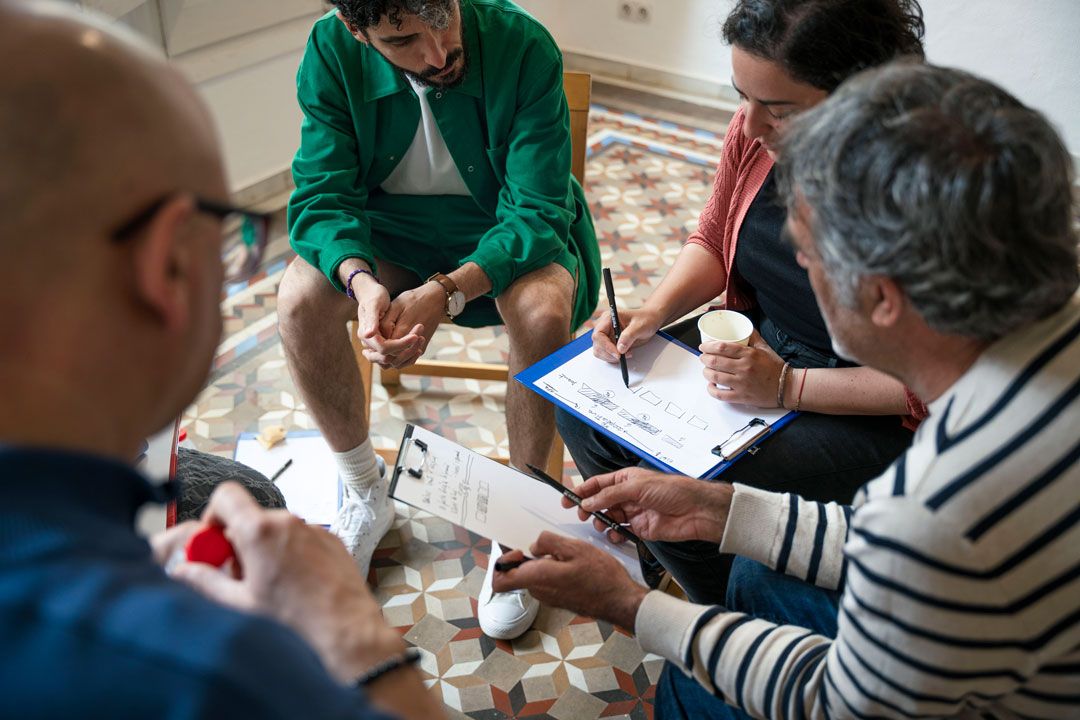
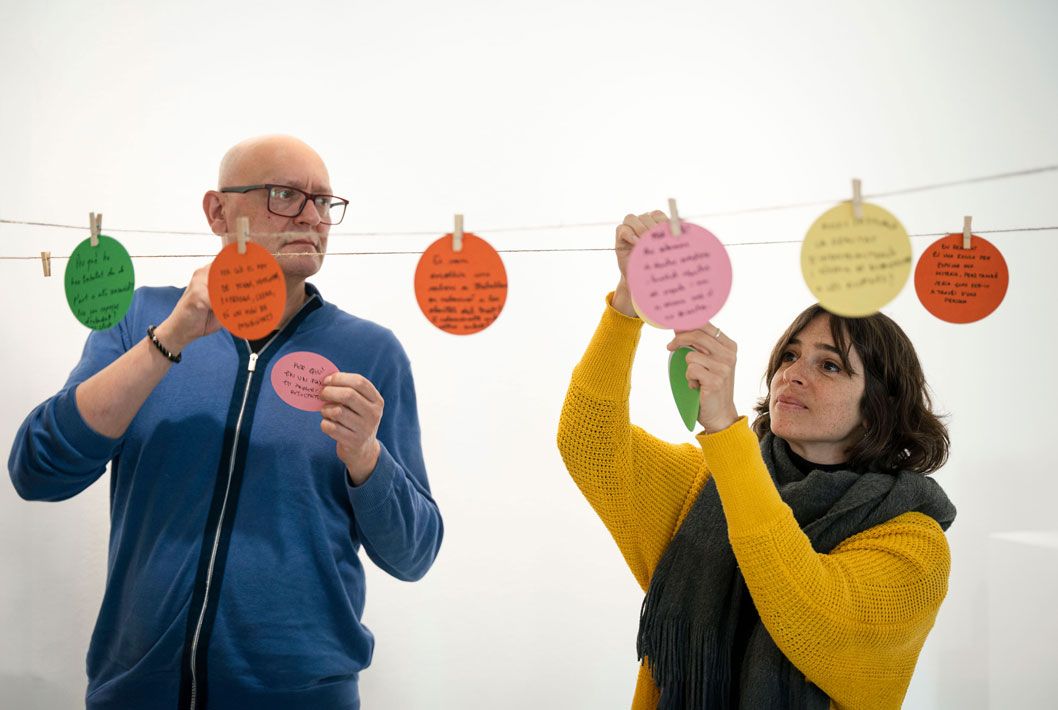
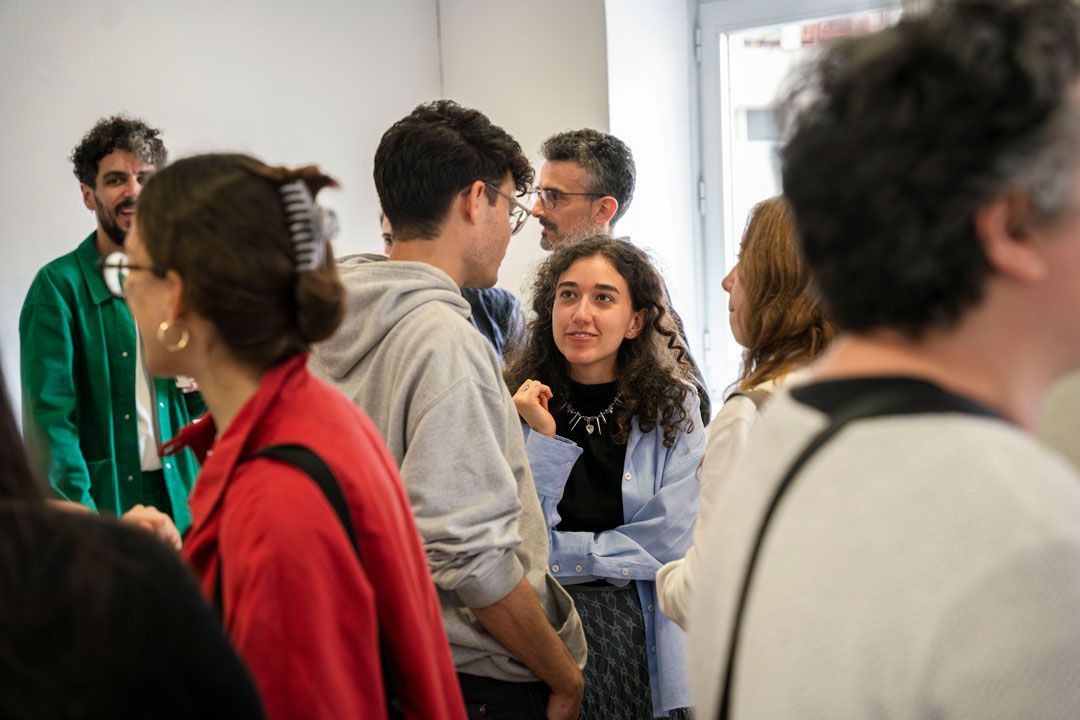
The next day, the “Intersections” project of El Prat de Llobregat Town Council was presented, after which a series of collective reflection sessions took place that championed the need to create support networks among teaching communities in order for them to play a more active role in educational policies.
The Can Sisteré cultural centre in Santa Coloma de Gramenet hosted this module devoted to two key pedagogical initiatives of the turn of the 20th century: the Escola del Mar (School of the Sea) and the New Education movement. The panellists Carmen Agulló, Sara Torres and Fanny Figueras reflected critically on the implementation of new curricula and alternative pedagogies, comparing them with these historical pedagogical initiatives.


Carmen Agulló provided the historical background to the New Education movement before relating its revolutionary methodologies to the challenges and dilemmas faced by education today. Meanwhile, Sara Torres focused on the pedagogies of the Escola del Mar, its capacity to survive in adverse circumstances (the Escola del Mar was bombed during the Spanish Civil War) and the poetics that emerged from this resilience. Fanny Figueras presented the transformative educational practices carried out at the Institut Angeleta Ferrer (secondary school) and shared the dilemmas faced there. The gastronomic space was organised by Kantina Migrante, while the workshop was devoted to play as an activator of dialogue within the teaching community.
The venue for this module was the Casa de Cultura in Sant Cugat del Vallès. A discussion was held with Antonio Centeno and Costa Badía, moderated by Empar Puerto. Taking the example of the Escola Vil·la Joana, the first municipal special education school in Barcelona, the panellists highlighted the shortcomings of the formal education system in terms of accommodating diversity. From a critical perspective, Antonio Centeno reviewed the pedagogies and socialisation problems that arise in special education schools and presented the Diversorium project. Meanwhile, Costa Badía described her experiences as an advocate for anti-ableism in her mediator role at the Queen Sofía National Museum - Art Centre (MNCARS), recounting the many obstacles and impediments she has encountered, as well as the moments of hope that reaffirm her work. Empar Puerto underlined the need to improve the material conditions of state schools, defending the principle that “schools must serve to guide society rather than to reflect it”.


The session held the following day kicked off with a breakfast of products provided by organic farming initiatives devoted to the prevention of food waste, namely Eixarcolant, EsImperfecte and DeCollserola, putting the spotlight on the possibilities of food sovereignty in our part of the world.

The collaborative process culminated on 5 June with a final gathering at our headquarters. Representing the teaching community, Empar Puerto, Mònica Ruíz Revuelta, Jaume Sans Vellvehí and Joan Carbonell Solsona participated in a discussion session led by Alba Oller.
The resulting pedagogical resource is the Pedagogical Oracle.